
TL;DR: Foreigners can obtain property loans in Thailand from major banks like UOB, Bangkok Bank, and SCB — typically borrowing 50–70% of a condominium's value at 5.5–8% interest over 20–30 years. You need a valid visa/work permit, proof of income, and a property within the 49% foreign ownership quota. This guide covers every step, compares bank rates, and includes a real case study with actual numbers.
Can Foreigners Actually Get a Loan in Thailand?
The short answer is yes — but with significant caveats. During my years working in urban planning at the Bangkok Metropolitan Administration, I regularly encountered foreign investors who assumed Thai banks would simply refuse them. That is only partly true. How to make a loan as a foreigner in Thailand is entirely possible, but the rules, eligibility criteria, and available loan types differ markedly from what Thai nationals enjoy.
The Legal Framework You Must Understand
Under the Condominium Act B.E. 2522 (1979), foreigners may own condominium units freehold, provided that foreign ownership in any single building does not exceed 49% of the total unit area. This is the foundational legal pillar that makes foreigner mortgages possible — banks will only lend against property they can register as collateral at the Land Department, and that means a freehold condo title (Chanote or Nor Sor 4 Jor).
You cannot get a Thai mortgage on leasehold land, a house on land you do not own, or a condo that has exceeded the 49% foreign quota. These restrictions define the boundaries of what is achievable.
Types of Loans Available to Foreigners
| Loan Type | Available to Foreigners? | Notes |
|---|---|---|
| Condominium Mortgage | ✅ Yes | Primary viable option; requires freehold condo within 49% quota |
| Personal Loan | ⚠️ Limited | Some banks offer to work permit holders; amounts typically capped at 1–5 million THB |
| Car Loan | ✅ Yes | Widely available with work permit; requires local income |
| Land/House Mortgage | ❌ No | Foreigners cannot own land; banks will not lend against leasehold structures |
| Business/Commercial Loan | ⚠️ Conditional | Possible through Thai-registered company (51%+ Thai owned) with BOI support |
The reality is that when people ask about how to make a loan as a foreigner in Thailand, they are almost always referring to a condominium mortgage. That is where I will focus the most detail.
How to Make a Loan as a Foreigner in Thailand: Step-by-Step Process
Understanding the process end-to-end before you start will save you weeks of frustration. Here is the realistic timeline based on what I have observed across dozens of transactions in Bangkok's property market.
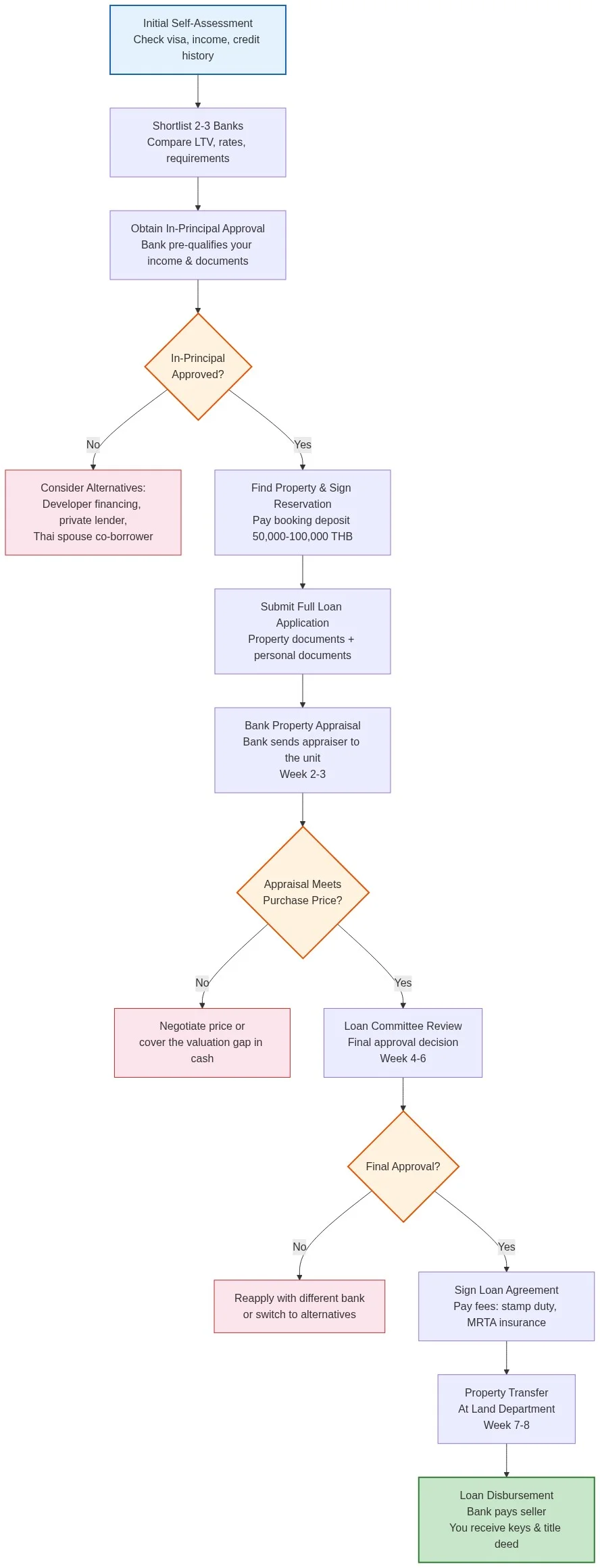
Step 1: Determine Your Eligibility (Weeks 1–2)
Before approaching any bank, honestly assess your profile against what Thai banks expect from foreign borrowers:
- Visa status: Non-Immigrant B (business), O (retirement/marriage), or the new LTR (Long-Term Resident) Visa are the strongest. The LTR visa, introduced in 2022, is particularly attractive — it signals long-term commitment and some banks view it favorably. (Source: Thai Board of Investment, LTR Visa Programme)
- Work permit: Having a valid work permit dramatically increases your chances. Banks want to see that you have stable, verifiable income in Thailand.
- Income level: Most banks require a minimum monthly income of 80,000–150,000 THB for foreign mortgage applicants. Your debt-to-income ratio (DTI) should not exceed 50%.
- Credit history: Banks will check your Thai credit record via the National Credit Bureau (NCB). If you have no Thai credit history, some banks accept international credit reports.
Step 2: Choose the Right Bank (Week 2)
Not all Thai banks treat foreign borrowers equally. I will cover the detailed comparison in the next section, but the key insight is this: apply to 2–3 banks simultaneously. There is no penalty for multiple applications, and it gives you negotiating power on interest rates.
Step 3: Prepare Your Documents (Weeks 2–3)
This is where most applicants lose time. Gather the following before you submit anything:
Personal Documents:
- Passport (all pages, certified copies)
- Valid visa and work permit (if applicable)
- Marriage certificate (if applying jointly with a Thai spouse)
- Latest 3–6 months of bank statements (Thai and/or international)
- Salary slips for the last 3–6 months
- Employment contract or letter from employer
- Personal income tax returns (Por Ngor Dor 91) for the last 1–2 years
Property Documents:
- Condominium title deed (Chanote) — the seller or developer provides this
- Sale and purchase agreement (draft or signed)
- Condominium juristic person's letter confirming the unit is within the 49% foreign quota
- Appraisal authorization form
What most people get wrong: Many foreigners submit international bank statements expecting Thai banks to treat them as equivalent to local income proof. Most Thai banks heavily weight income earned in Thailand and taxed locally. If your income is entirely overseas, expect additional scrutiny and potentially lower LTV offers.
Step 4: Submit Application and Property Appraisal (Weeks 3–5)
Once your application is submitted, the bank will order an independent property appraisal. This is a critical juncture. The appraiser visits the condo unit, assesses the building condition, checks comparable sales in the area, and assigns a valuation.
Here is the urban planning insight most property blogs miss: the appraiser's valuation is heavily influenced by proximity to transit infrastructure. A condo within 500 meters of a BTS or MRT station will typically appraise 10–20% higher than an otherwise comparable unit 1.5 kilometers away. According to research from the Japan International Cooperation Agency (JICA) on Bangkok's urban transport development, properties within walking distance of mass transit stations command sustained price premiums. This directly affects your loan amount.
If the appraisal comes in below the purchase price, you must either renegotiate the price or cover the difference in cash. The bank lends against the appraised value or the purchase price — whichever is lower.
Step 5: Approval and Disbursement (Weeks 6–8)
If the loan committee approves your application, you will receive a formal offer letter detailing the interest rate, loan amount, tenure, and all conditions. You then schedule the property transfer at the Land Department, where the bank's representative will be present to register the mortgage and disburse funds to the seller.
Realistic total timeline: 6–10 weeks from initial application to receiving your keys and registered title deed.
Bank-by-Bank Comparison: Which Thai Banks Lend to Foreigners?
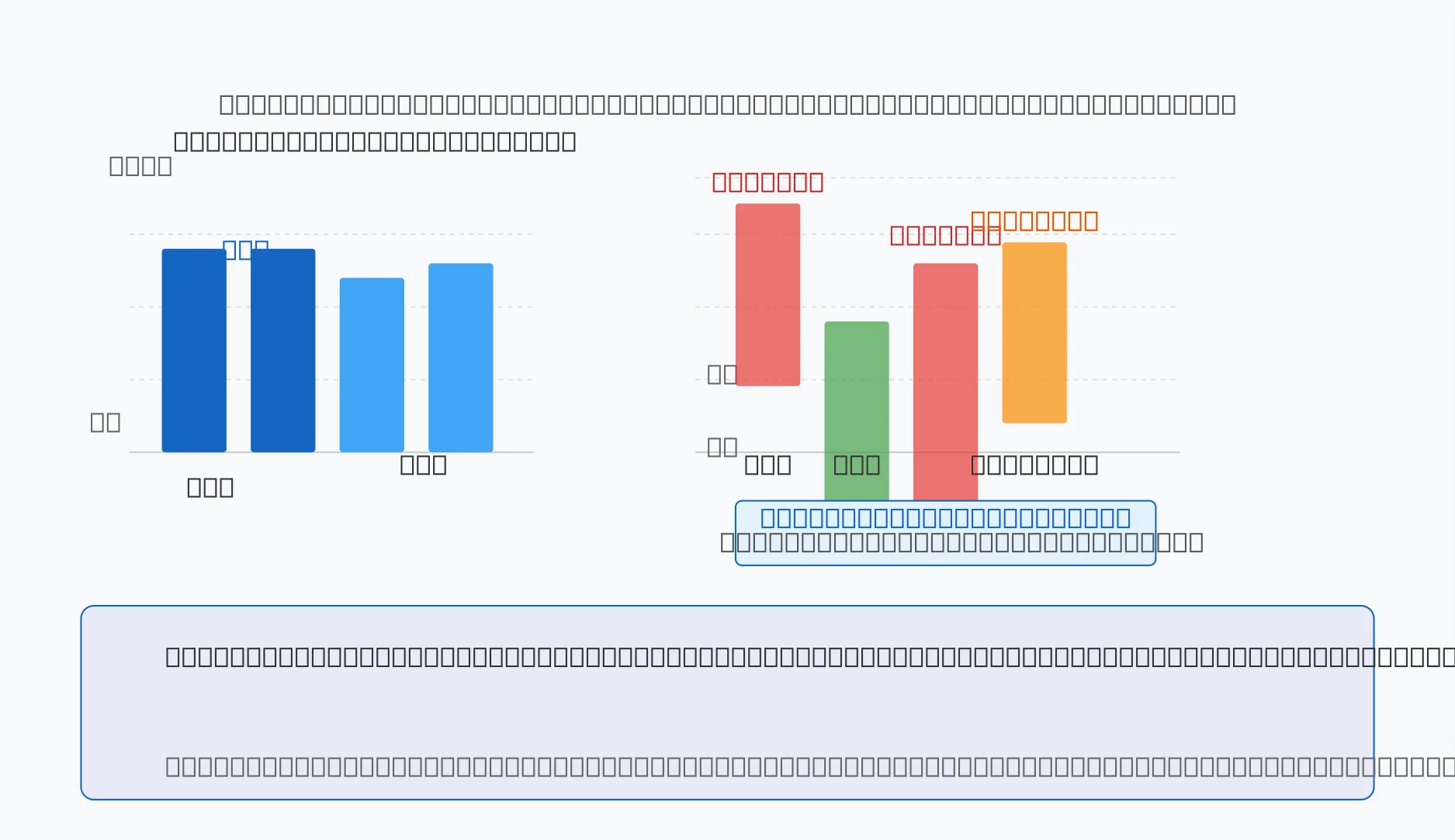
This is the heart of understanding how to make a loan as a foreigner in Thailand — choosing the right lender. Below is my comparison of the banks most likely to approve foreign mortgage applications, based on prevailing 2024–2025 conditions.
United Overseas Bank (UOB) Thailand — Best Overall for Foreigners
UOB consistently ranks as the most foreigner-friendly bank for mortgages in Thailand. Their Singaporean parentage and regional focus make them more comfortable assessing foreign income sources and international credit profiles.
- Maximum LTV: Up to 70% for qualified applicants
- Interest rate: 5.50–7.00% (most competitive among major banks)
- Minimum income: ~100,000 THB/month
- Key advantage: Will consider overseas income more flexibly than Thai-domestic banks
- Tenure: Up to 30 years (or age 65, whichever comes first)
Bangkok Bank (BBL) — Most Accessible
Bangkok Bank is Thailand's largest bank and has the most established foreign banking division. They have branches worldwide, including in London, New York, and Singapore.
- Maximum LTV: Up to 70%
- Interest rate: 6.50–8.00% (generally higher for non-resident foreigners)
- Minimum income: ~80,000 THB/month for residents; higher threshold for non-residents
- Key advantage: Largest branch network; can facilitate international fund transfers
- Tenure: Up to 25 years
Siam Commercial Bank (SCB)
SCB is a major lender with a strong digital platform, making the application process somewhat smoother.
- Maximum LTV: Up to 60% for foreigners (more conservative than UOB/BBL)
- Interest rate: 6.00–8.00%
- Key consideration: Stricter on foreign income verification; prefers Thailand-based applicants
- Tenure: Up to 25 years
Krungsri (Bank of Ayudhya)
Backed by Mitsubishi UFJ Financial Group (Japan's largest bank), Krungsri has been expanding its foreigner lending in recent years.
- Maximum LTV: Up to 65%
- Interest rate: 6.25–7.75%
- Key advantage: Japanese corporate backing appeals to Japanese expatriates (large expat community in Thailand)
- Tenure: Up to 25 years
HSBC and International Banks
HSBC Thailand ceased retail banking services in 2012 but maintains commercial banking. HSBC Premier clients can sometimes arrange cross-border mortgages through HSBC in Hong Kong or Singapore for Thai properties, though this requires substantial assets under management (typically $1 million+). This is a niche option but worth mentioning for high-net-worth individuals.
Interest Rates, Fees, and the Real Cost of Borrowing
Understanding the headline interest rate is only the beginning. The total cost of a foreigner mortgage in Thailand includes several layers that can add 2–4% to your effective borrowing cost over the loan's life.
Current Interest Rate Environment
Thai mortgage rates are tied to reference rates set by individual banks: MLR (Minimum Loan Rate), MRR (Minimum Retail Rate), and sometimes fixed rates for an initial period. According to the Bank of Thailand, the policy rate stood at 2.50% as of late 2024, and commercial bank MLR rates ranged from 5.50% to 7.00%. Foreigner mortgages are typically priced at MLR plus a 1.0–2.5% premium.
This means that if a Thai national might receive an offer at MLR + 0.5%, a foreigner could face MLR + 2.0% — a significant difference that compounds over a 20-year loan.
Hidden Costs Beyond Interest
| Cost Item | Typical Amount | When Paid |
|---|---|---|
| Appraisal Fee | 2,000–5,000 THB | At application |
| Loan Processing Fee | 3,000–10,000 THB | At approval |
| Mortgage Registration Fee | 1% of loan amount | At Land Department transfer |
- Transfer Fee | 2% of appraised value (often split 50/50 with seller) | At transfer |
- Stamp Duty | 0.5% of appraised value | At transfer |
- Specific Business Tax (SBT) | 3.3% of appraised value (seller pays, but may be passed on in off-plan deals) | At transfer |
- The borrower chose a property within 400 meters of Phra Khanong BTS — this directly supported a strong appraisal that met the purchase price.
- He applied to three banks (UOB, BBL, and SCB) simultaneously and used the competing offers to negotiate UOB's rate down from 6.75% to 6.25% fixed for three years.
- His DTI ratio was a healthy 36% — well under the 50% threshold most banks use.
- The first appraisal by a different bank came in 200,000 THB below the purchase price because the appraiser was unfamiliar with the building's recent upgrade to common areas. The borrower had to commission an independent appraisal to contest it.
- The bank initially requested 6 months of Thai bank statements, but the borrower had only been banking locally for 4 months. UOB ultimately accepted his last 2 years of UK bank statements as supplementary evidence.
- The MRTA insurance added 185,000 THB to closing costs — a sum the borrower had not fully budgeted for.
- Down payment: 20–30%
- Interest rate: 0–5% (some offer 0% during construction)
- Repayment period: 3–7 years (much shorter than bank loans)
- Advantage: Minimal documentation; no work permit required
- Risk: The property remains in the developer's name until full payment — you do not get the title deed until the loan is fully paid
- Interest rate: 10–18% per annum
- Maximum LTV: 50–60%
- Tenure: 1–5 years (short-term bridge financing)
- Use case: Best for short-term needs when you plan to refinance with a bank later or sell the property
- Condotels (condominium-hotel hybrids with rental pools)
- Units in buildings with structural or legal disputes
- Properties with incomplete title documentation
- Condos in buildings where the developer's company registration has been revoked
- MRT Orange Line (Thailand Cultural Centre–Min Buri): Expected completion 2026–2027
- BTS Grey Line (Watcharapol–Ramindra): Planned
- MRT Pink Line (Khae Rai–Min Buri): Under construction, expected 2025–2026
- Former Bangkok Metropolitan Administration Planner
- 15+ years urban planning experience
- Infrastructure Development Expert
- BTS/MRT Expansion Analyst
| MRTA Life Insurance | 1.5–3.5% of loan amount | At transfer (one-time) |
|---|
MRTA and Life Insurance Requirements
Most Thai banks require Mortgage Reducing Term Assurance (MRTA) — a decreasing-term life insurance policy that pays off the remaining loan balance if the borrower dies. This protects the bank's collateral. The one-time premium for a 4 million THB loan over 20 years typically runs 150,000–250,000 THB depending on your age and health.
Some banks allow you to waive MRTA if you provide evidence of equivalent existing life insurance — always ask, as this can save you significant money.
Case Study: Real Foreigner Mortgage Approval in Bangkok
To illustrate how how to make a loan as a foreigner in Thailand works in practice, let me share a representative case based on transactions I observed during my time advising on property development projects along the Sukhumvit corridor.
Case Study: Foreigner Condo Purchase — Sukhumvit, Bangkok (2024)
Illustrative case based on common foreigner mortgage scenarios in Bangkok, 2024. Individual results vary by bank and applicant profile.
Lessons Learned From This Case
What went right:
What almost went wrong:
My expert takeaway: If I had to distill this into one piece of advice for anyone researching how to make a loan as a foreigner in Thailand, it would be this: budget for total costs of 7–9% above the purchase price, not the commonly cited 5–6%. The combination of a 30%+ down payment, MRTA, transfer fees, and stamp duty adds up quickly.
Alternatives If Your Bank Loan Is Rejected
Bank rejection is not the end of the road. Based on my experience, approximately 30–40% of foreigner mortgage applications in Thailand are either rejected or come back with terms so unfavorable that buyers walk away. Here are the alternatives:
Developer Financing
Many Thai developers offer in-house financing for off-plan or recently completed projects. Terms are typically:
Developer financing is common for projects by major developers like property listings along transit corridors. Browse Bangkok property projects to find developers offering in-house terms.
Private Lenders and P2P Platforms
Thailand has a growing private lending and peer-to-peer (P2P) lending market, regulated by the Securities and Exchange Commission (SEC) of Thailand. These lenders are more flexible but significantly more expensive:
Using a Thai Spouse's Name
Married to a Thai national? Your spouse can apply for a mortgage as a Thai citizen (with 80–90% LTV and lower interest rates), and you can be a co-borrower or guarantor. The property can be registered in the Thai spouse's name, or in both names for a condominium.
Critical legal note: If the property involves land (a house), the land can only be in the Thai spouse's name. A legally binding agreement between spouses — where the foreigner waives any claim to the land — is typically required by the Land Department. I strongly recommend consulting a qualified Thai property lawyer before pursuing this route.
Cash Purchase Strategies
With no viable financing, some foreign buyers opt for cash purchases. Thai property prices, particularly for condos, can be attractive when paid in cash. You may also negotiate a 5–10% discount for cash offers on resale properties. Explore Bangkok condos for cash-purchase opportunities in your budget range.
Common Mistakes Foreigners Make When Applying for Thai Loans
Having advised on numerous transactions, here are the mistakes I see repeatedly:
1. Ignoring the 49% Foreign Quota
The single most common deal-killer. If a condominium building has already reached its 49% foreign ownership quota, no bank will lend to a foreigner for a unit in that building — period. Always request a quota confirmation letter from the juristic person before making an offer. Properties listed on our platform typically indicate quota status, but always verify independently.
2. Underestimating the Income Documentation Requirements
Thai banks are strict about income proof. I have seen applications rejected because the applicant's salary was paid to a different bank account than the one on the application, or because a year-end bonus was excluded from the income calculation. Be thorough and consistent.
3. Choosing the Wrong Property Type
Banks will not finance:
4. Not Understanding the Interest Rate Structure
Many foreigners are surprised when their "fixed" rate converts to a floating rate after 1–3 years. Always read the full amortization schedule and model the worst-case floating rate scenario (typically MLR + 2–3%). According to historical Bank of Thailand data, MLR rates have fluctuated between 5.50% and 7.50% over the past decade, so plan for rate changes.
5. Failing to Plan for Visa/Work Permit Expiry
Your loan tenure may extend well beyond your current visa or work permit validity. Most banks require you to maintain valid status for the entire loan period, though enforcement varies. If your work permit expires and you leave Thailand, the bank may technically call the loan. This is a genuine risk — plan for visa renewal contingencies.
How Transit Infrastructure Affects Your Loan and Property Value
This is my area of deepest expertise, and it is something no other guide on how to make a loan as a foreigner in Thailand covers. As an urban planner, I can tell you that transit infrastructure is one of the single most important factors in Thai property valuation — and it directly affects your loan.
BTS/MRT Proximity and Bank Valuation
Bank appraisers in Bangkok systematically apply proximity premiums:
| Distance to Nearest BTS/MRT | Typical Valuation Premium |
|---|---|
| Within 300 meters | +15–25% over area baseline |
| 300–500 meters | +10–15% |
| 500 meters–1 km | +5–10% |
| Over 1 km | Baseline or slight discount |
This means that when you choose a property near a transit station, you are not just making a lifestyle choice — you are maximizing the appraised value, which directly increases your potential loan amount. A condo that costs 5 million THB near a BTS station may appraise at 5.5 million THB, whereas an identical unit 2 km away might appraise at only 4.5 million THB. The difference in your maximum loan can be 700,000 THB or more.
Future Line Extensions: A Planning Perspective
The Bangkok Metropolitan Administration and the Thai government have committed to an ambitious transit expansion plan. As of 2025, major projects underway include:
Properties near planned but not yet operational stations represent an opportunity. Banks may not yet factor future stations into current appraisals, but properties purchased now near future transit corridors are likely to appreciate significantly. This creates equity that can be used for refinancing down the road. Explore Sukhumvit properties and Silom properties for established transit-adjacent options.
For the most current transit development information, refer to the Mass Rapid Transit Authority of Thailand (MRTA) official website.
The Bottom Line
How to make a loan as a foreigner in Thailand is entirely achievable with the right preparation. The keys are: (1) choose a freehold condo within the 49% foreign quota, (2) target foreigner-friendly banks like UOB or Bangkok Bank, (3) prepare meticulous income documentation, and (4) budget for total costs of 7–9% above the purchase price. Apply to multiple banks simultaneously, choose transit-adjacent properties for stronger appraisals, and always have a fallback plan (developer financing or cash) in case your bank application is rejected.
The Thai property market offers excellent value for foreign buyers, and financing — while more complex than in many Western countries — is a well-trodden path. With the information in this guide, you are now equipped to navigate it with confidence. Start browsing property listings and apartments for rent to find your next investment.
Frequently Asked Questions
Can a foreigner get a mortgage in Thailand without a work permit?
Yes, but your options are significantly limited. Most major banks require a work permit for mortgage approval, but UOB Thailand and some developer financing programs may consider applicants with long-term visas (such as the LTR or Elite Visa) and verifiable overseas income. Expect lower LTV ratios (50–60%) and higher interest rates without a work permit.
What is the maximum loan amount a foreigner can get in Thailand?
There is no statutory maximum, but most banks cap foreigner mortgages at 50–70% of the property's appraised value (LTV ratio). The actual loan amount depends on your income, debt-to-income ratio (typically capped at 50%), and the property valuation. Loans commonly range from 2 million to 20 million THB for typical Bangkok condominiums.
How much down payment do foreigners need for property in Thailand?
Foreigners should budget for a 30–50% down payment when financing through a Thai bank. At 70% LTV (the best-case scenario with banks like UOB or BBL), you need 30% down. More conservative banks offering 50–60% LTV require 40–50% down. Always add 7–9% for additional closing costs (transfer fees, MRTA insurance, stamp duty).
Which Thai bank is best for foreigner mortgages?
UOB Thailand is widely considered the best bank for foreigner mortgages due to competitive rates (5.50–7.00%), up to 70% LTV, and more flexible treatment of foreign income sources. Bangkok Bank (BBL) is a strong second choice with the largest branch network. I recommend applying to at least 2–3 banks simultaneously to compare offers.
Can I use income from abroad to qualify for a Thai mortgage?
Yes, but with caveats. Thai banks strongly prefer income earned and taxed within Thailand. If your income is entirely from abroad, banks like UOB are more accommodating, but you will need extensive documentation: 2+ years of international bank statements, tax returns from your home country, and sometimes employer verification letters. Expect more scrutiny and potentially lower LTV offers than locally employed applicants.
Written by Wichai Tanthapat, Urban Planning & Development Expert. With over a decade of experience at the Bangkok Metropolitan Administration, Wichai specializes in transportation infrastructure, zoning regulations, and the intersection of transit development and property valuation in Thailand.
Data Visualizations

Urban Planning & Development Expert
Former urban planner at Bangkok Metropolitan Administration with expertise in transportation infrastructure, zoning regulations, and future development projects. Tracks BTS/MRT expansion and its impact on property values.